
Smarter Excavation: How Machine Control Upgrades Improve Accuracy and Productivity

Er. Rashid Suleiman
Equipment Operational Manager, Mikas
[email protected]
Table of Contents
In today’s construction environment, productivity is no longer defined only by engine power or bucket size. It’s defined by precision, efficiency, and consistency. This is where excavator machine control systems are changing the way work gets done.
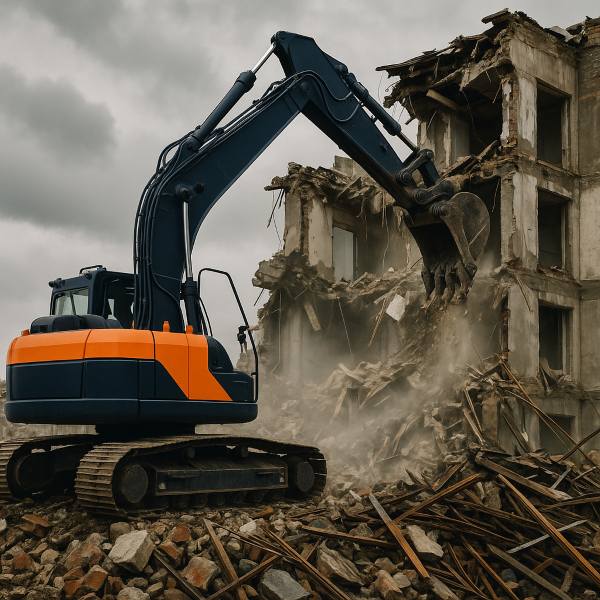
For contractors managing tight schedules and rising operating costs, upgrading excavator machine control is less about technology and more about better outcomes on site. From reducing rework to improving operator confidence, modern machine control systems are becoming a practical upgrade rather than a luxury.
This article explains how excavator machine control upgrades work, what problems they solve, and how they directly impact productivity on real construction projects.
Understanding Excavator Machine Control
Excavator machine control systems use sensors, GPS, and digital displays to guide operators during digging, grading, and trenching tasks. Instead of relying entirely on visual judgment and manual measurements, operators receive real-time feedback on depth, slope, and position.
Depending on the system, machine control can be:
- 2D systems (depth and slope guidance)
- 3D systems (GPS-based positioning and digital models)
Both systems aim to improve accuracy and reduce guesswork during excavation.
The Productivity Challenges Excavation Teams Face
Before understanding the benefits of machine control upgrades, it helps to look at the common productivity issues on excavation sites.
Typical challenges include:
- Over-excavation and under-excavation
- Frequent rework due to incorrect depth or slope
- Dependence on ground surveyors for checks
- Inconsistent performance between operators
- Material wastage
- Increased fuel consumption
Delays caused by repeated measurements
These issues are not due to operator skill alone. They are often the result of limited visibility and manual control methods.
How Machine Control Upgrades Address These Problems
Upgrading excavator machine control directly targets the root causes of inefficiency.
1. Improved Accuracy From the First Pass
One of the biggest productivity gains comes from accuracy.
With machine control:
- Operators see exact target depth on the screen
- Bucket position is continuously monitored
- Cut and fill operations become precise
This reduces:
- Over-digging
- Material wastage
- Time spent correcting mistakes
Even small improvements in accuracy can lead to significant time savings across large projects.
2. Reduced Rework and Material Waste
Rework is one of the biggest productivity killers in excavation.
When excavation is done manually:
- Crews often dig deeper “to be safe”
- Extra material must be refilled or removed
- Compaction work increases
Machine control helps excavate to design level the first time, reducing the need for correction. This directly saves time, fuel, and labor costs.
3. Faster Project Completion
Machine control systems allow operators to work continuously without stopping for constant checks.
Benefits include:
- Less waiting for survey stakes
- Fewer manual measurements
- Reduced dependency on external survey teams
On large infrastructure projects, this can shorten excavation timelines by days or even weeks.
4. Higher Operator Confidence and Consistency
Machine control doesn’t replace operators—it supports them.
Operators benefit from:
- Clear visual guidance
- Less mental stress
- Greater confidence in executing precise work
This also reduces performance gaps between experienced and less-experienced operators, leading to more consistent output across shifts.
Productivity Gains Beyond the Excavator Itself
Machine control upgrades improve productivity not just for the excavator, but for the entire site.
Reduced Surveying Bottlenecks
Traditional excavation relies heavily on surveyors to:
- Set grade stakes
- Check depth
- Confirm alignment
With machine control:
- Many checks are done digitally
- Survey teams focus on planning rather than constant monitoring
- Workflow becomes smoother
Better Coordination With Other Equipment
Accurate excavation benefits follow-on activities such as:
- Pipe laying
- Foundation work
- Road base preparation
- Concrete placement
When excavation is precise, downstream teams work faster and with fewer corrections.
Fuel Efficiency and Cost Control
Productivity is closely linked to operating cost.
Machine control helps reduce fuel usage by:
- Minimizing unnecessary digging
- Reducing idle time
- Eliminating repeated passes
Even small reductions in fuel consumption can result in substantial savings across long-term projects.
2D vs 3D Machine Control: Which Delivers Better Productivity?
Both systems improve productivity, but their use cases differ.
2D Machine Control Systems
Best suited for:
- Trenching
- Flat grading
- Simple slope work
Advantages:
- Lower cost
- Easier installation
- Immediate productivity improvement
3D Machine Control Systems
Best suited for:
- Large infrastructure projects
- Complex site layouts
- Digital construction workflows
Advantages:
- Works directly with digital design models
- Higher accuracy over large areas
- Reduced need for physical layout work
Choosing the right system depends on project scale and complexity.
Retrofitting Machine Control on Existing Excavators
A common misconception is that machine control is only for new machines.
In reality:
- Many systems can be retrofitted
- Older excavators gain new life
- Fleet productivity improves without full replacement
For contractors managing mixed fleets, retrofitting allows productivity upgrades without major capital investment.
Safety Improvements That Support Productivity
Safety and productivity go hand in hand.
Machine control improves safety by:
- Reducing sudden over-digging
- Helping avoid underground utilities
- Minimizing operator fatigue
- Improving machine stability awareness
Safer operations lead to fewer stoppages, fewer incidents, and smoother project flow.
Training Time and Workforce Efficiency
Training new operators traditionally takes time and supervision.
- With machine control:
- Operators learn faster
- Visual guidance accelerates understanding
- Errors are corrected in real time
This reduces onboarding time and increases workforce efficiency, especially during labor shortages.
Long-Term Value for Fleet Owners
From a fleet management perspective, machine control upgrades:
- Increase equipment utilization
- Improve resale value
- Make machines more attractive to clients
- Reduce maintenance caused by improper operation
For rental and contract fleets, this translates into better return on assets.
Is Machine Control Worth the Investment?
The answer depends on how productivity is measured.
Machine control delivers value when:
- Projects are repetitive
- Accuracy is critical
- Rework costs are high
- Timelines are tight
- Fuel and labor costs are rising
For many contractors, the productivity gains offset the upgrade cost within a few projects.
Final Thoughts
Upgrading excavator machine control is not about chasing technology trends. It’s about solving real site problems—accuracy, efficiency, consistency, and cost control.
By reducing rework, improving operator performance, and speeding up excavation tasks, machine control upgrades help contractors deliver better results with fewer resources. In an industry where margins are tight and expectations are high, smarter excavation methods are becoming essential.
For companies looking to boost productivity without expanding fleet size, machine control upgrades offer a practical and proven path forward.