

What Is a Boom Lift? Uses, Types and Applications in Construction

Rashid Suleiman
Equipment Operational Head, Mikas Middle East
[email protected]
Table of Contents
Working at height is a common requirement in construction, infrastructure development, and industrial maintenance.
To perform these tasks safely and efficiently, contractors rely on specialized aerial access equipment.
One of the most widely used machines for elevated work is the boom lift.

Boom lifts are designed to provide flexible reach and safe access to difficult areas that cannot be reached using ladders or scaffolding.
From high-rise construction to industrial maintenance, these machines have become an essential part of modern job sites.
This guide explains what a boom lift is, how it works, the different types available, and the industries that rely on this equipment.
What Is a Boom Lift?
A boom lift is a type of aerial work platform (AWP) that lifts workers, tools, and materials to elevated locations using a hydraulic arm.
The extendable arm—called a boom—allows the platform to reach both vertically and horizontally.
Unlike scissor lifts, which move only straight upward, boom lifts provide greater flexibility and reach, making them ideal for tasks that require access around obstacles.
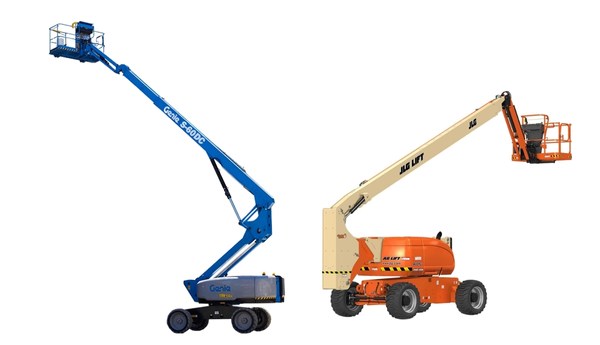
A typical boom lift consists of several key components:
• an extendable hydraulic arm
• a work platform or basket
• a rotating base
• hydraulic control systems
• stabilizing outriggers or wheels
Operators control the lift from the platform or the base unit, allowing them to move the arm and position the platform precisely where work needs to be performed.
How Does a Boom Lift Work?
Boom lifts operate using hydraulic systems that extend and maneuver the boom arm. Hydraulic cylinders push the arm outward or upward, allowing the platform to reach elevated work areas.
Most boom lifts also feature a rotating base that enables the arm to swing horizontally. This allows workers to reach locations that may be difficult to access with vertical lifts.
Depending on the model, boom lifts can reach heights ranging from 10 meters to more than 40 meters.
Operators use control panels to:
• raise or lower the boom
• extend or retract the arm
• rotate the base
• adjust platform positioning
This precise control allows workers to safely perform tasks in complex environments such as construction sites, factories, and large buildings.
Types of Boom Lifts
There are several types of boom lifts available, each designed for specific applications and working conditions.
1. Telescopic Boom Lifts
Telescopic boom lifts—often called straight boom lifts—feature a single extendable arm that moves outward in a straight line.
These lifts are ideal for jobs that require long horizontal reach, such as exterior construction work and bridge maintenance.
Key advantages include:
• extended reach capability
• high working heights
• suitability for outdoor projects
2. Articulating Boom Lifts
Articulating boom lifts have multiple joints in the boom arm, allowing the machine to bend and move around obstacles.
This design makes them particularly useful when workers need to access areas that cannot be reached in a straight line.
Common applications include:
• building maintenance
• indoor industrial work
• facility inspections
3. Diesel Boom Lifts
Diesel-powered boom lifts are designed for outdoor construction environments. They provide strong lifting capacity and can operate on rough terrain.
These machines are often used for:
• large construction projects
• infrastructure work
• outdoor maintenance operations
4. Electric Boom Lifts
Electric boom lifts operate using battery power and produce minimal noise and emissions. Because of this, they are commonly used indoors.
Typical applications include:
• warehouse maintenance
• shopping mall installations
• indoor facility management
Common Uses of Boom Lifts in Construction
Boom lifts are widely used across construction projects because they provide safe and efficient access to elevated work areas.
Some of the most common uses include:
1. Building Construction
Boom lifts allow workers to install structural elements, windows, and exterior finishes on tall buildings. Their flexible reach makes them ideal for accessing difficult areas around structures.
2. Steel Structure Installation
During steel framework construction, boom lifts help workers install beams and structural components at height.
3. Exterior Maintenance
Maintenance crews use boom lifts to repair building exteriors, paint facades, and install signage.
4. Electrical and Lighting Installation
Boom lifts are frequently used to install electrical systems, lighting fixtures, and communication equipment on tall structures.
5. Bridge and Infrastructure Work
Infrastructure projects often require access to elevated or difficult-to-reach areas. Boom lifts provide safe working platforms for inspection and repair.
Industries That Use Boom Lifts
Although boom lifts are most commonly associated with construction, they are used in many industries.
1. Construction Industry
Construction companies rely on boom lifts for tasks such as structural installation, facade work, and roofing.
2. Facility Management
Large commercial buildings, shopping centers, and hotels require boom lifts for maintenance and repair work.
3. Industrial Facilities
Factories and manufacturing plants use boom lifts for equipment maintenance and inspections.
4. Logistics and Warehousing
Warehouses often use aerial lifts for maintenance work and installation of storage systems.
5. Infrastructure Development
Government infrastructure projects such as bridges, highways, and airports depend on boom lifts for elevated work.
Boom Lift vs Scissor Lift
Contractors often compare boom lifts with scissor lifts when choosing aerial work platforms.
While both machines provide elevated access, they serve different purposes.
Boom lifts provide:
• horizontal reach
• flexible maneuverability
• access around obstacles
Scissor lifts provide:
• vertical elevation only
• larger working platforms
• stable work surfaces for multiple workers
Choosing the right equipment depends on the specific requirements of the project.
Safety Considerations When Using Boom Lifts
Operating aerial work platforms requires proper safety procedures. Workers must be trained and follow equipment guidelines to avoid accidents.
Important safety measures include:
• using safety harnesses
• checking ground stability
• inspecting equipment before operation
• maintaining safe load limits
• following manufacturer guidelines
Proper training and regular equipment inspections help ensure safe operation on construction sites.
Choosing the Right Boom Lift
Selecting the correct boom lift depends on several factors.
Contractors should consider:
• required working height
• horizontal reach requirements
• indoor or outdoor usage
• terrain conditions
• power type (diesel or electric)
Understanding these factors helps ensure the equipment selected is suitable for the job.
Conclusion
Boom lifts have become an essential tool in modern construction and industrial operations.
Their ability to reach high and difficult areas safely makes them indispensable for projects that require elevated work.
From building construction to infrastructure development, boom lifts help workers perform tasks efficiently while maintaining safety standards.
As construction projects continue to grow in scale and complexity, aerial access equipment like boom lifts will remain a critical part of job site operations.
For contractors and businesses looking for reliable access equipment, selecting the right boom lift can significantly improve productivity and safety on the job.